Instagram: Manchester United
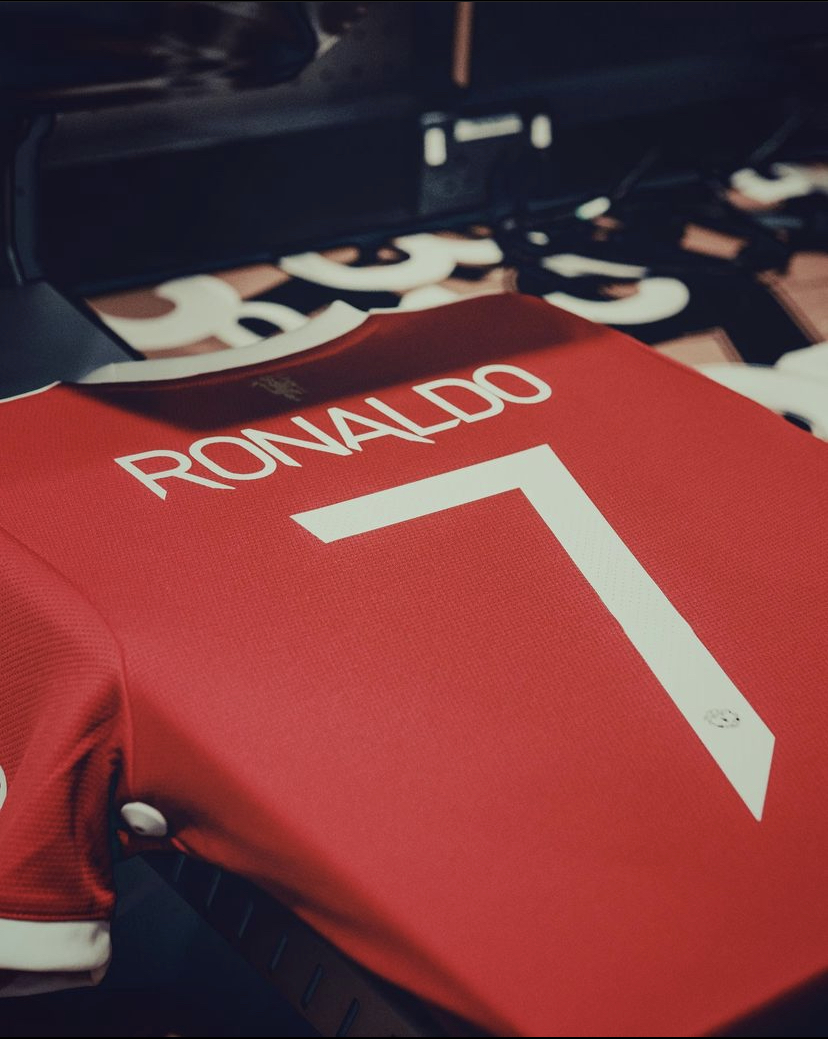
Cristiano Ronaldo’s long awaited return to Old Trafford saw him have the performance he was precisely bought for, but vastly different from his last ones in the red shirt of Manchester United.
When Manchester United signed Cristiano Ronaldo on the penultimate day of the Summer transfer window this season, the general feeling was that this was a ceiling raising signing based on nostalgia and a desire to make a statement to the football world. Few people would call the signing of a 36-year old forward with little tactical flexibility and high wage demands to a squad with serious attacking depth a shrewd floor raising signing based on astute recruiting methods. No, that’d be a defensive midfielder. And yet, it seemed like a smart move at the time. Now there is even a slice of confirmation after Ronaldo’s second debut that he will make Manchester United fairly better and that much closer to winning silverware.
There has been a lot of talk of the intangible things Ronaldo brings to the Manchester United squad. Ultimate professionalism, unmatchable work ethic, “winning mentality”, “a hunger and need to win trophies”—these are only some of the unmeasurable athletic qualities and overused football clichés that have been floated around Ronaldo’s move. It will take at least a season for us to see if some of these things have come into effect, and some we’ll never be able to know for sure. The technical qualities Ronaldo is expected to bring and not bring, however, we caught a glimpse of during his second debut against Newcastle.
Let’s first answer a key question. What is Cristiano Ronaldo good at? Simply put—scoring goals. He’s scored 676 goals in 896 appearances for Sporting Lisbon, Manchester United (two stints), Real Madrid, and Juventus collectively. That’s roughly 0.75 goals/appearance, or a goal every 1.33 games. He can score with his right, left, or head from just about anywhere in the penalty box. Near post, or far post. Scrappy, or clean. He scores goals.
Nowadays, he’s rarely running up and down the flanks and cutting inside with a bag of tricks. Instead, he’s making sprints beyond the last defender and floating around the box waiting to pounce on any opportunity. Ronaldo has adjusted to his aging body by becoming a very potent penalty box poacher. No longer the high flying winger he was when he left Old Trafford, he’s now on the ends of attacks as a centre forward. The cuts inside with stepovers and bending finishes to the far post have been traded for tight finishes at the near post and high jumping back post headers. He uses his elite finishing, world class movement, and keen awareness to finish even the half chances he’s provided by teammates, and like against Newcastle, opponents.
Ronaldo has always kept in top shape throughout his career—even at the age of 36. He has had to make sacrifices on the pitch to maintain his attacking prowess though. The main one is his defensive and pressing contribution on the pitch. According to FBref.com, Ronaldo is in the 1st percentile in pressures per 90 and the 4th percentile in tackles per 90. He conserves his energy in games for bursts of speed on the counter and continuous movement in the opponent’s box. Rarely will you see Ronaldo sprinting at the ball to force a pass wide or long.
All of Ronaldo’s current strengths and weaknesses were on full display against Newcastle on Saturday afternoon. His first goal came from his sharp sense of where the ball would be in the box. A decent strike from Mason Greenwood on the right hand side just outside the box deflected off of a Newcastle defender before bobbling off goalkeeper Freddie Woodman. While everyone on the pitch watched the ball fly towards Woodman for a seemingly simple catch, Ronaldo ghosted towards the centre of the goal, ready for a possible rebound—and a rebound came. Isaac Hayden, who was marking Ronaldo, didn’t know Ronaldo ran behind him until the latter was just about to make contact with the rebounded ball.
Having Ronaldo in the side makes a difference in this scenario. No one in Manchester United’s squad other than Edison Cavani, and maybe Mason Greenwood would have the instinct to make that movement towards the centre of the goal. Anthony Martial in this scenario would likely be caught ball watching and would only spring into action when Jamaal Lascelles made a move to clear the ball. Marcus Rashford would be deeper in the box as he prefers to receive the ball slightly further away to create space for himself before shooting. Mason Greenwood doesn’t have the best instincts in and around the box at this early point in his senior career, but there are hints of it starting to develop—like in his goal against Southampton in the home opener. Though a high quality veteran striker with smart movement and penalty box instincts was already present in the squad in Cavani, Ronaldo adds another weapon for Solskjaer to use at the tip of his attack.
Ronaldo’s second goal comes from his elite finishing. In the 62nd minute, Ronaldo latches onto an inch perfect pass by Luke Shaw, takes one touch with his right foot to get the ball away from Hayden, then strikes the ball low and hard with his weaker left foot to slot it between Woodman’s legs and into the goal. Manchester United already have an elite finisher in Greenwood who seems to be able to finish at any angle with any foot. Martial on his day, can be a very clean finisher as well. Adding Ronaldo to the attack allows the team to attack from even more angles because of his ability to finish from anywhere in the box with his right foot, left foot, or soaring headers.
Out of possession, Ronaldo looked as you’d expect. He was constantly moving, but not with much defensive intent. If anything, he would move to get into a good attacking position to be ready for a counter should his teammates win possession back. It’s hard to say Ronaldo was pressing much against Newcastle. Slowly jogging towards the opposing player with the ball, half-heartedly urging them to pass it wide? Yes. Pressing? No. This is what you get from arguably the best goalscorer in history. At the same time, he didn’t show a hint of fatigue during his run for his second goal, nor on subsequent runs in search of his third, so you can say his energy was well conserved.
Cristiano Ronaldo’s debut was a showcase of his strengths and weaknesses that he brings to Manchester United. He floated around the penalty box, weaved in and out between defenders, and finished chances well instead of pressing the opponent, or dropping deep to help the defence. Fans and the team alike would take this tradeoff all season long.
Do Manchester United win this game without Cristiano Ronaldo in the side? Most likely. Do they do it as convincingly? Not so likely. Ultimately, Manchester United’s undoing this season will be from their weak midfield. The forced double pivot of Nemanja Matic and Paul Pogba was as sturdy as a straw house. Allan Saint-Maximin cut through the middle of the pitch like a hot knife through butter. Pogba couldn’t be bothered to track back half the time. Matic didn’t have the legs to track Saint-Maximin’s runs, so he settled for poorly timed challenges high up the pitch that left him stranded. The McFred pivot is not world class, but it is good. The depth behind the McFred pivot however, is extremely poor. Manchester United’s ceiling has been raised with a booming “siu” in unison, but their floor hasn’t moved an inch without a new defensive midfielder.
 The Utility Spot