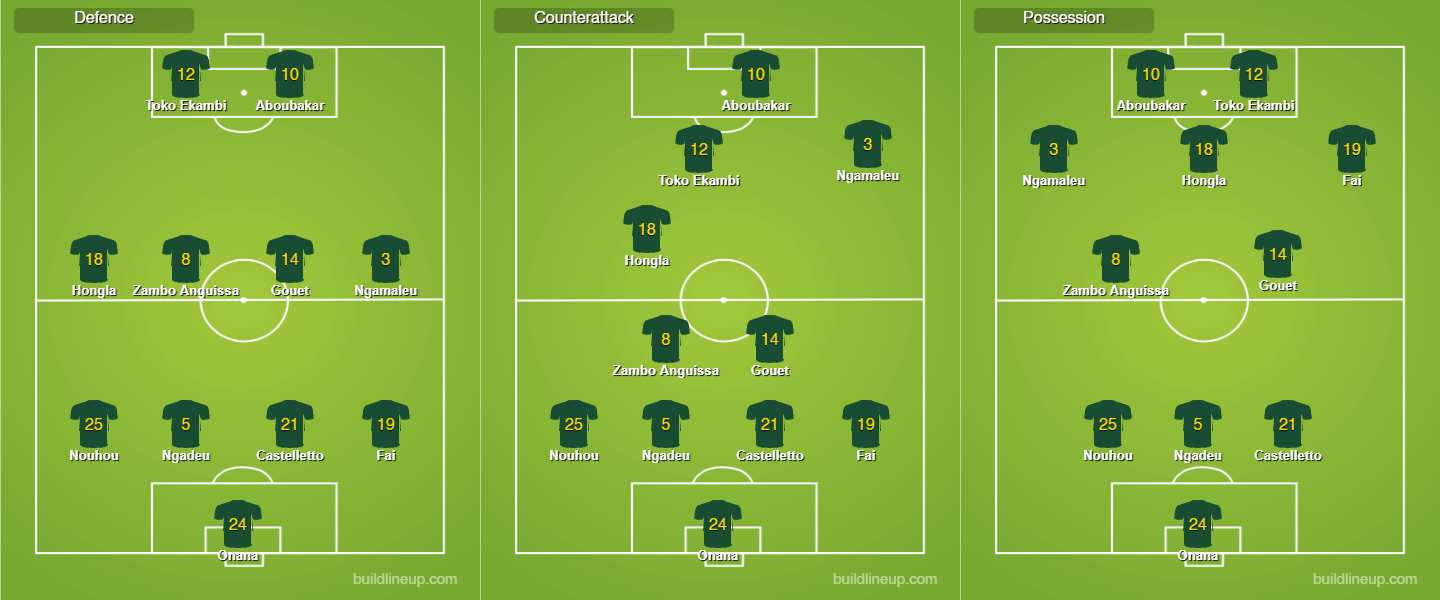
Fluidity! We love a fluid formation! That’s what Cameroon head coach Toni Conceição is bringing to Les Lions Indomitables’ campaign in the 2021 African Cup of Nations. Throughout their run in the tournament, Cameroon have used different formations for different phases of play to much success as they’ve booked a semi-final match against Egypt’s Pharaohs.
Cameroon entered AFCON 2021 with a wealth of talent. In attack particularly, they boast some serious firepower. Talisman striker Vincent Aboubakar is Cameroon’s fourth top goalscorer of all time with 31 goals in 81 caps. Versatile veteran journeyman Eric Maxim Choupo-Moting is Cameroon’s joint eighth top goalscorer with 17 goals in 65 caps. The on fire Karl Toko Ekambi has 11 goals and 6 assists in all competitions for Lyon this season. Moumi Ngamaleu has 5 goals and 10 assists for Young Boys. The other four forwards in the squad have pace to burn or strength to exert. The attacking abilities of the midfielders can’t be forgotten either.
So with only 11 positions on the pitch and an emphasis on defence in tournament football, how can Conceição fit all these attacking options into one team?
Enter fluidity.
Cameroon defend in a rigid 4-4-2 low-mid block. The flat back four hold a low to mid line, the wingers stay wide, and the midfielders are evenly spaced in the middle of the formation. The pressing is mostly done by the front two with a midfielder occasionally stepping forward to snap at a loose touch or half turn.
The 4-4-2 is a tournament favourite because it’s hard to break down, and relatively easy to implement. With energetic central midfielders like Cameroon has in Samuel Oum Gouet and André-Frank Zambo Anguissa, the wingers have the more simple task of defending the wings and tracking runs from the opposition fullbacks. The wingers can stay wide because the central midfielders will cover all the space between the flanks. Conceição can play four attacking players and stay solid in the defensive phase because the wide attackers are given simple defensive tasks, so there’s less vulnerability in the areas they occupy.
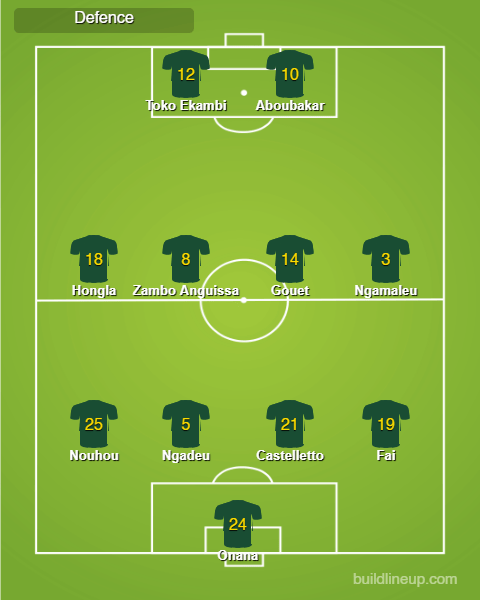
Once Cameroon win the ball back, they like to counter quick, direct, and vertically. The counterattacking shape looks like a 4-2-1-3 with a lopsided front three. Toko Ekambi stays narrow and close to Aboubakar, while Ngamaleu maintains width. Against The Gambia, Gouet and Zambo Anguissa stayed deep to cover the space and allow Martin Hongla to make trailing runs as a free 10. With six players staying back on counters, Cameroon are protected against an opposition counterattack should their own counterattack break down. Additionally, only committing the four attackers is adequate as they have enough pace to get past defenders and enough strength to retain possession amidst challenges.
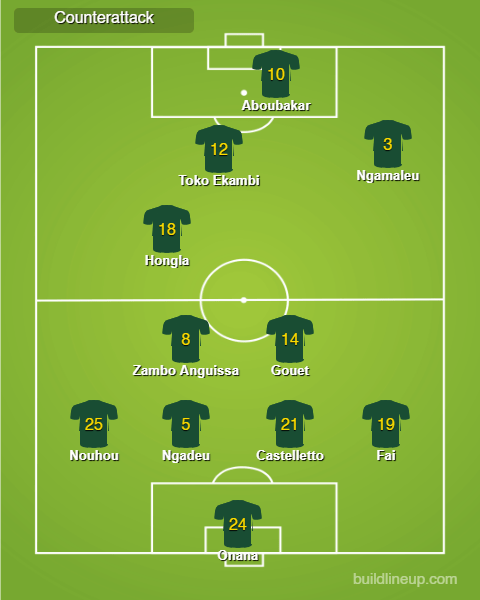
If the momentum of a counterattack breaks down and a quality opportunity doesn’t present itself, Cameroon reset and control possession extremely well. They have the lion’s share of possession with an average of 60.2% possession across the five matches they’ve played.
Unconventionally, Cameroon don’t retain possession by recycling the ball in midfield. Instead, they form a very aggressive 3-2-5 shape to keep their foot on the opposition’s neck. Aboubakar and Toko Ekambi apply pressure on the opposition centrebacks and stay central to be in ideal positions to finish chances. Ngamaleu, a more conventional winger than Toko Ekambi, maintains width to cross the ball in, or cut inside with the ball. Against The Gambia, Hongla took up space between the attackers as a floating 10. Collins Fai rounded out the attacking line by pushing very high up into a right wing position to deliver crosses into the box for the two strikers and additional runners into the box.
Nouhou Tolo, the much more defensive of the two fullbacks, tucks inside to form a back three with the centrebacks. Nouhou will occasionally make runs forward like a traditional left back, but mostly reserves his pace for chasing down opposition long balls forward. The back three combined with the insurance policy of Nouhou’s recovery pace allow Cameroon’s attackers to thrive and freely occupy dangerous areas in the opponent’s third.
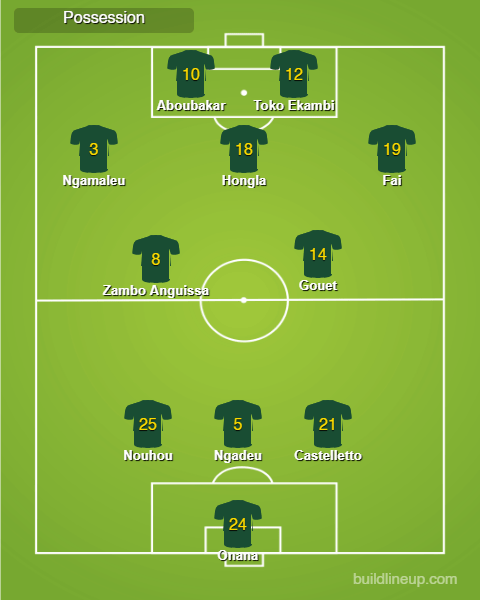
It’s always a tough puzzle to solve when a national team is blessed with attacking talent because international tournament football lends itself to prioritizing defence. While Toni Conceição could set Cameroon up very pragmatically as is common practice for many national team managers, he instead opts to set the team up in a way that optimizes its strength and features its best players who are attackers.
When Cameroon’s attackers need to defend, they defend with simple instructions. When Cameroon’s attackers break on the counter, they can do so knowing they have six teammates back to protect against an opposition counterattack. When Cameroon’s attackers are in the possession phase, they can stay forward and maintain pressure on the opposition defence knowing they have insurance policies should the team lose the ball.
Even in substitutions, Conceição is aggressive in his approach. In the tournament so far, he’s only subbed off defenders three times—Fai twice (once due to injury) and Nouhou once. All his other subs have been attacking changes to keep Cameroon’s blade sharp and continuously dangerous to the opposition.
Les Lions Indomitables have a tough, but deserved semi-final tie against Mo Salah’s Egypt. Cameroon’s ensemble of attackers will have to stay lethal to break down Carlos Queiroz’s well drilled defence. It’ll be a sensational matchup between one of the best players in the world in Mo Salah and the so far very effective insurance policy in Nouhou. If Cameroon are able to keep up their form, they could well be facing off against Senegal for silverware this Sunday on home soil.
 The Utility Spot